Irish experts reveal how a warmer autumn is impacting nature’s calendar and putting wildlife and crops at risk
Butterfly species have bred three times this year, instead of once, lilies are flowering late and lawnmowers are still required in October.
The signs are everywhere that the warm summer and mild autumn knocked nature “out of sync”.
Astrid Wingler, Professor of Plant Biology at University College Cork, reports that a lily and red osier dogwood are now flowering in her Cork garden which “probably shouldn’t happen”.
“If there’s a frost, then the flowers may just get damaged,” she said.
Prof Wingler‘s field is phenology. She wants to understand variations in “nature’s calendar” by examining how key seasonal biological events like plant flowering, insect emergence and bird migration – are affected by changes in climate.
For an EPA-funded project, Prof Wingler tracked how climate change was dramatically shifting nature’s calendar in Ireland.
“The outcome was that spring advances,” she said. “Basically, everything happens earlier in spring.”
A “false spring” is a term used to describe a period of unseasonably warm weather in late autumn, winter or early spring followed by a return to more normal cold temperatures.
The warmth tricks plants or trees into earlier growth, leaving them exposed to freezing conditions when cold, frost or snow returns, which can damage or kill them off. It can also lead animals or birds to breed too early and their young can starve.
A false spring happened in France in 2021 when a warm spell triggered vines to grow early, before a late frost hit, causing massive economic losses to several wine areas.
There can also be a “false autumn” effect when trees and plants start shedding their leaves and dropping fruit much earlier than usual.
“This matters because trees pull nutrients back out of their leaves before they fall, so if the leaves stayed green and a sudden frost arrived, the leaves would get killed without having recycled the nutrients,” Prof Wingler said.
Ireland’s native trees, such as oak, birch and ash respond to shortening days, as well as to temperature.
These trees require a period of winter cold before they will produce new leaves – a strategy biologists regard as a safeguard against being triggered into producing leaves by a warm spell only to be hit again by winter cold.
This past summer was kinder to butterflies – insects famously sensitive to climate shifts and in long-term decline here – than scientists might have expected.
The heavy rain in May and June benefited the shrubs, clover, nettles and grasses the butterflies feed on, while the warmer conditions accelerated caterpillar growth.
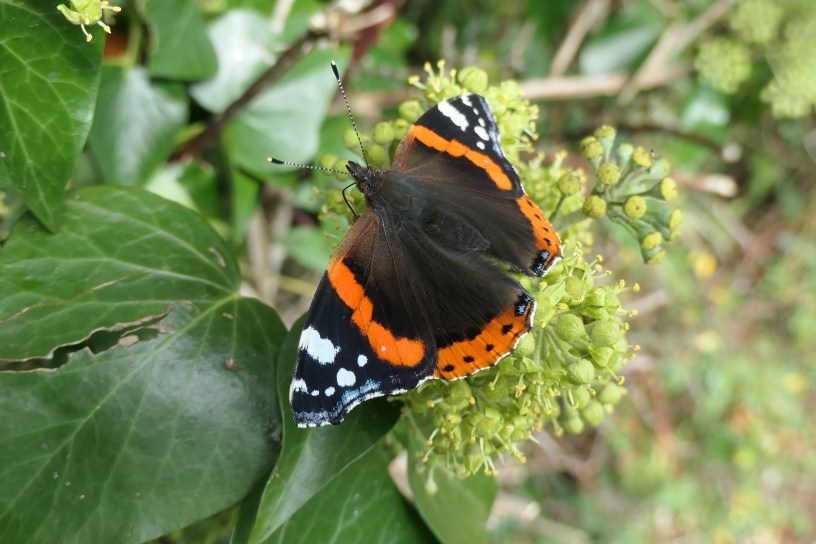
Jesmond Harding, Conservation Officer with Butterfly Conversation Ireland, who lives in Meath, said he recently saw a red admiral butterfly flying by.
“In south Meath, I saw the small copper butterfly produce a third brood this year, while several moth species managed an unusual second generation,” Mr Harding said.
It was a good year for butterfly migrants, he said. Huge numbers of painted ladies, clouded yellows and red admiral species arrived from southern Europe along with hummingbird hawk-moths travelling from North Africa.
However, the long-term future for butterflies is grim. The Irish Butterfly Monitoring Scheme has recorded a 65pc decline in Ireland’s 15 most common butterfly species since 2008.
This is alarming given that butterflies – due to their sensitivity to weather – act like a canary in the climate-change coal mine.
“The green-veined white, one of the most common species fell by 87pc between 2008 and 2021,” said Mr Harding, while only one of Ireland’s 35 butterfly species, the migrant red admiral, has increased in number in that time.
The use of agricultural fertilisers is an issue for butterflies because it ensures that grass is growing thicker and greener across longer, warmer growth seasons.
Caterpillars feed on grass just above the soil, an area that has been cooled by the thickness of the grass, but caterpillars need warmth to digest the grass.
“The caterpillar is still able to eat the food [grass], but their enzymes can’t digest it, so they die,” Mr Harding said.
Dr Jim Barnett, an ecologist in the Department of Zoology at Trinity College Dublin, warns that the colourful arrivals could be misleading.
The heat in Europe this year has pushed insect migrants north in greater numbers than normal, he said.
The migrants are “a nice thing to see” and generally no threat to native insects, he said; though invasive species such as the Asian hornet are a bigger concern.
The worry, said Dr Barnett, is that while the influx of colourful insect migrants is reassuring it can “mask that a lot of our other species that are here year-round are declining underneath”.
There is a worry, he said, about year-on-year impacts of warmer weather and the fact that extreme summer heat may not manifest in ecological damage until the following spring.
“The knock-on effects of extreme weather in one summer may well have delayed effects, which aren’t seen until the following spring,” Dr Barnett said.
“We need to tackle both the climate crisis and the biodiversity crisis at the same time if we really want to have functioning ecosystems going into the future.”
Niall Hatch, Head of Communications and Development at Birdwatch Ireland, said the warmer weather created winners and losers.
“Blackbirds, robins and song thrushes struggled as worms burrowed deeper into baked soil. Swallows, swifts and warblers did well, with more insects on the wing,” he said.
Breeding and migration patterns are driven by daylight length, not variation in temperature. This can put birds “out of sync” with insects and plants who respond to warmth.
The synchronicity problem can be seen with the blue tit, a common garden bird with about 1.1 million breeding pairs present on the island.
“It times its nesting for late April and early May to match the peak emergence of caterpillars, a food source for blue tits,” Mr Hatch said.
“But the caterpillars are peaking earlier than they used to because of changing climate. Those two patterns are going out of kilter.”
Puffins face a similar problem at sea. As the oceans relentlessly heat, the sand eels the puffins feed to their chicks move north to follow plankton, which the eels feed on.
“In parts of Iceland, Norway and northern Scotland, the eels are so far from nesting colonies that chicks are starving,” Mr Harding said.
Food production took a hit this year, but the impact varied, Shay Phelan, a tillage crop and potato specialist with Teagasc, said.
When the rain came late in the summer, grass and vegetable crops managed to make up for lost growing time, but cereals didn’t do likewise. The potato crop has taken a hit too.
“Early digs suggest the potato crop could be down by 10 to 15pc, perhaps 20pc, but a surplus from 2025 lasted into August and September this year, buffering supermarkets,” Mr Phelan said.
Malt barley growers in the south-east, upon which brewers and distillers rely, saw “huge levels of rejections” due to weather this year, and he estimates Ireland may need to import an extra 1-200,000 tonnes of grain to supply brewers like Guinness.
The mild weather last year meant aphids carrying a barley virus, bred into the winter when they would normally be dormant and this damaged winter barley.
Similar weather could also threaten this year’s crop. However, science is helping, Mr Phelan said, as 70pc of the winter barley sown this autumn carries genes which provide it with resistance to virus carried by aphids.
“Farmers are no different than anybody else, they are going to have to learn to adapt. They will need to adapt their crop choices and harvest times and find reliable water,” he said.
Published in the Irish Independent (07.11.2026)

