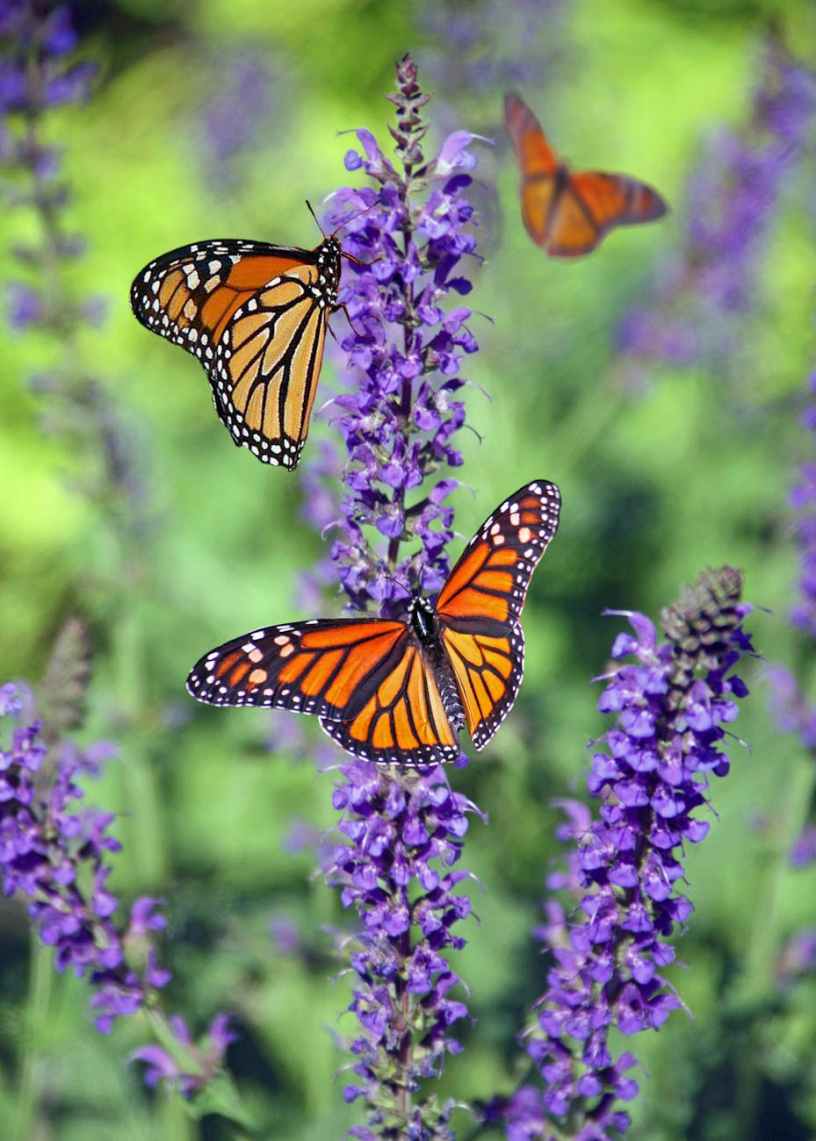
Bees and butterflies do not have enough natural habitat to survive in Ireland or globally, an international study has found.
Pollinators, which are crucial to the health of ecosystems, require between 16 and 37pc natural habitat coverage in farmland areas to survive, according to 59 studies worldwide, as reported in the journal Science.
“About 13pc of Ireland is officially protected for nature under EU nature directives, but most of those habitats are not in a good state for nature,” said Jane Stout, Professor of Ecology at Trinity College Dublin, and a co-author of the study.
The EU Biodiversity Strategy aims to return natural habitat to 10pc of the agricultural landscape, which falls short of what insects require to survive.
“About 12pc of our land is forested and about 64pc is farmed, most of it quite intensively, so we probably fall some way short of the 16-37pc the new work suggests is viable, especially in the more intensively farmed areas,” Prof Stout said.
Insects contribute to ecosystem services by pollinating crops and wild plants, but their populations have been declining in Ireland for years.
The new study also shows that better management of existing natural habitats, such as by promoting hedges, woodlots and grasslands is helpful, but it is insufficient to halt pollinator loss.
“Because there is a huge diversity in different types of insects, which have different needs for food and habitat, at different stages of their life cycle, and because they can be highly mobile, then – in totality – we need a lot of high diversity habitat to support them all,” Prof Stout said.
Insects make up 75pc of world’s animal biodiversity and they live in every habitat on Earth, from the soil to the tops of trees, from coasts to mountain peaks.
Life on Earth is inconceivable without insects. They convert plant material into animal protein, are a food source for other animals, act as predators of pests in food production systems, break down dung or dead organic material and by acting as pollinators, they help most plant species to produce seeds.
Here in Ireland, we are at greater risk of insect species loss than continental Europe or Britain because we have less diversity of insects.
That means that our ecological networks may be less resilient than elsewhere in Europe.
Insects really are the little things that run the world
To protect insects, Prof Stout said, there must be greater diversity in farming systems, crop types and landscape features, such as hedges, ditches, walls and ponds, and more “insect-friendly” lands available in urban areas.
If we continue as we are, significant insect species losses for Ireland and the world was likely to follow, and consequences would be severe, Prof Stout said.
 Science Spinning