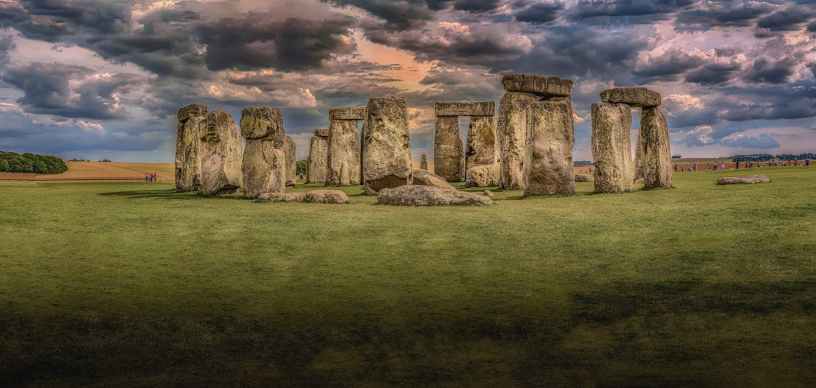
Winter solstice feasts at Newgrange involved people eating meat from fattened pigs, ingesting hallucinogenic mushrooms and drinking alcohol – similar to feasts at Stonehenge at the same time, according to new research.
“The pigs were deliberately fattened on acorns in oak forests for a period prior to being slaughtered at Newgrange, mainly during midwinter feasting conducted around 2,600 to 2,450BC,” said Dr Neil Carlin, a UCD archaeologist who took part in the research along with others from Ireland, the UK and Canada, and whose work has been published in Proceedings of the Prehistoric Society.
“It also shows very strong links with places like Stonehenge where very similar solstice-related pig feasting was happening at the same time,” Dr Carlin said.
It was surprising, he added, to find such strong evidence that the winter feasting at Newgrange and Stonehenge were taking place at exactly the same time and in a very similar manner.
We don’t know whether the feasting went on for a day, a week or more
The researchers believe the Newgrange feasts would have involved groups of people gathering at the entrance to the sealed tomb, perhaps to pay homage to their ancestors.
This view is based on the quantity of materials present, the nature of the radiocarbon dates recovered from the animal bones and the size of the timber and earthen monuments constructed at the time.
“This may have been 100 or maybe 1,000 people – we can’t tell, and we also don’t know whether the ceremonies and feasting went on for a day, a week or more,” said Dr Fiona Beglane, archaeologist at the Atlantic Technological University, Sligo, and a lead author.
“We think that it may have involved larger numbers of people for several days over at least a few decades.
“There may have been a formal religious ceremony, perhaps including ritual slaughter of the animals, followed by depositing offerings of pork joints to the ancestors, and then the feasting.”
The researchers found grooved-ware pottery in the area outside the tomb – a pottery type that has been linked to the storage of food and drink and the making and consuming of alcoholic drinks.
“Based on the presence of grooved ware, they were probably drinking alcohol, maybe mead – which is made from honey – or beer-type drinks, made from grain, or maybe fruit wines,” Dr Beglane said.
“They may also have used hallucinogenic mushrooms or poisonous plants to induce states of altered consciousness.”
The archaeologists believe midwinter feasting at Newgrange continued for centuries after the tomb was closed, even when the sun lighting up the burial chamber was no longer visible.
The Newgrange results highlight an especially intense use of acorns
Dr Eric Guiry, an archaeologist at Simon Fraser University in British Columbia, and a lead author of the research, studies the diets and behaviour of the people of Newgrange.
It was interesting, he noted, that the archaeological findings from Newgrange showed how little pig husbandry practices in Ireland had changed over the centuries.
“In some of the earliest Irish writings, such as law texts, pigs are strongly linked to acorn feeding,” Dr Guiry said.
“The Newgrange results highlight an especially intense use of acorns –underscoring the deep antiquity of the connection between pigs, people and forests in Ireland.”
 Science Spinning