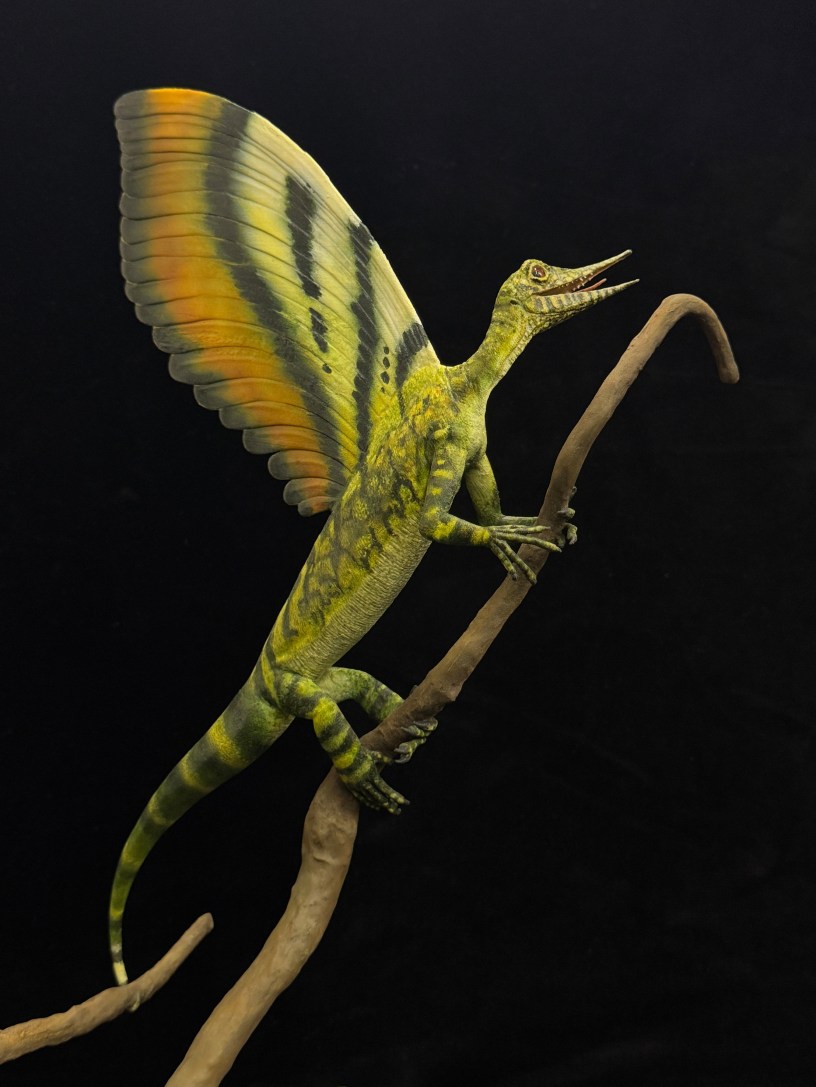
Biologists have long thought feathers first evolved so that creatures like birds could better regulate their body temperature, but UCC research on a fossil reptile suggests a different explanation.
Questions about the long held thermo-regulation theory for why feathers evolved on Earth follows analysis by Maria McNamara, Professor of Palaeontology at UCC, and UCC colleagues of the soft tissue of a 247-million-year-old reptile fossil, Mirasaura grauvogeli.
“This discovery suggests that feather-like structures may not have first evolved for keeping animals warm, but as a display symbol,” said Prof McNamara about the research reported in Nature.
She said it was “akin to peacock feathers that were used to advertise fitness and attract potential mates, or as a visual threat signal to compete with other members of the species or warn off dangerous predators.”
The analysis of tissue from the structures on the “bizarre” reptile’s back by the UCC team has revealed similarities to tissues found in animal feathers today. If they are confirmed as early feathers the date of when feathers evolved must be put back by 70 million years.
The fossil was found in the Grès à Voltzia region of southern France, and came into the hands of the State Museum of Natural History in Stuggart, Germany. Scientists there led the research which included UCC’s Prof McNamara, Dr Valentina Rossi and Dr Tiffany Slater.
Pterosaurs, a species of flying reptiles that dominated the skies for 150 years and only went extinct 66 million years ago, were the first vertebrates known to have evolved powered flight.
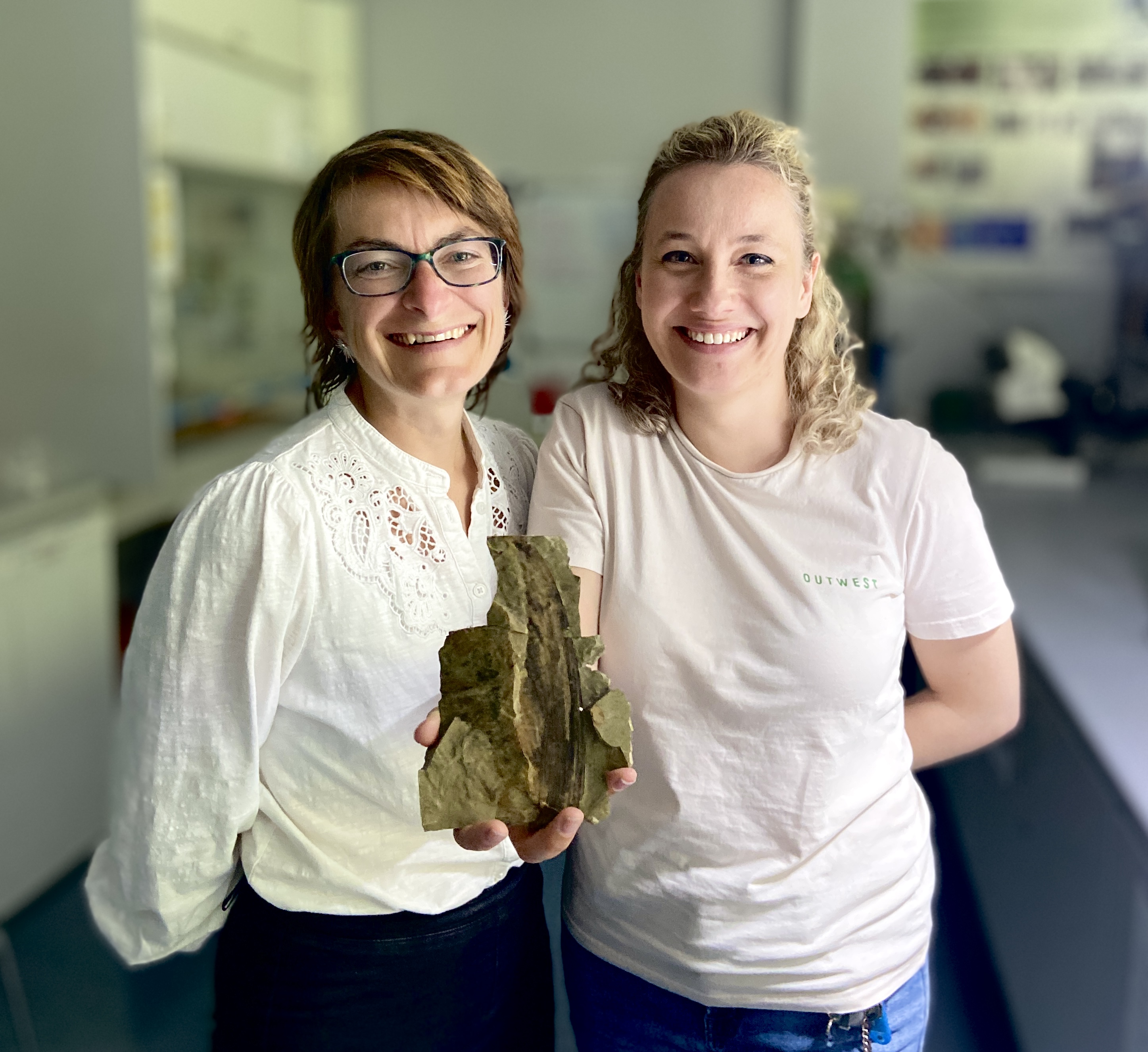
In 2018, Prof McNamara’s team made global headlines when they reported that pterosaurs had feathers that covered the entire body, and this was in keeping with the idea they regulated temperature.
Feathered dinosaurs had been discovered in China in the 1990s. In following years, the fossil remains of small dinosaurs were found that were covered in feathers, while, in larger dinosaurs, feathers were often restricted to the end of the tail, or a tuft behind the head.
Other dinosaurs were found with long plumes, or decorative groups of feathers. In those cases, said Prof McNamara, it was “absolutely ridiculous” to think that the feathers were regulating body heat.
“They are the wrong shape and size,” said Prof McNamara. “When you look at modern animals with similar structures the primary function is display. It’s in visual communication to augment your body size to help you look bigger, as a deterrent to predators.”
Similarly, there is no evidence, she said, that the feather-like structures in Mirasaura were used for regulating temperature.
“This little specimen is telling us is that thermoregulation may not have been the first function (of its feathers),” said Prof McNamara. “It may have been visual display.”
“Based on the distribution of these integumentary appendages, it’s completely inconsistent with something to generate body heat. This is going to shatter what people believe about feathers.”
The use of synchrotron CT imaging by the UCC team revealed that fossil reptile had a delicate, bird-like skull with a largely toothless snout, large forward-facing eyes, and a high domed skull.
These features, plus grasping forelimbs, suggest it was a tree-dwelling reptile that lived on insects and other small prey.
The UCC team analysed tissue from the fossil’s integumentary structures using a powerful microscope and x-ray technology. They found the tissue was full of preserved melanosomes, tiny organelles that reside in vertebrate skin, hair and feather cells today.
“We know that in modern animals, melanosome shape is closely linked to tissue type,” said Dr Rossi. This gives the UCC team confidence, she said, the structures have similarities to feathers.
In 2018 the Cork-based team made international headlines with the finding that pterosaurs – the earliest known vertebrates to evolve powered flight which died out 66 million years ago – had feathers.
The Prof McNamara led team predicted feathers evolved from a shared reptilian ancestor of pterosaurs and dinosaurs. It was a shock, she said, to find a reptile, from an entirely separate lineage and such an early period had developed feather-like structures.
“That’s really what blows your mind,” said Prof McNamara.
The “amazing” fossil finding, said Dr Slater, a co-author of the paper, has forced the UCC team to return to the drawing board to determine when feather-like structures first evolved on Earth.
“Mirasaura reveals a deeper, more complex evolutionary story than we ever expected,” said Dr Slater.
 Science Spinning