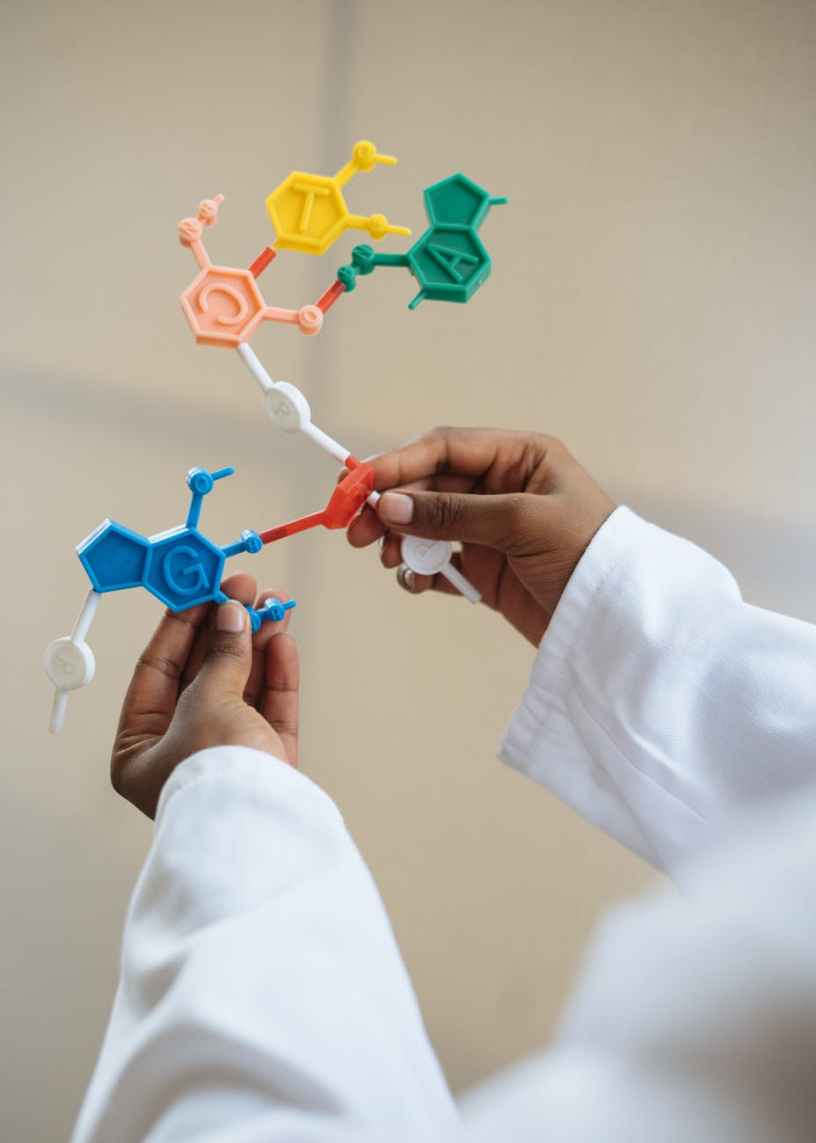
There’s nothing to stop scientists creating artificial life, said an Irish scientist after a UK charity announced support for a project to create synthetic DNA.
The Wellcome Trust – a London-based charity that funds health research with legacy funding from deceased pharmaceutical magnate Henry Wellcome – is to provide £10m (€8.5m) for the new Synthetic Human Genome Project (SynHG). The news was first reported yesterday by the BBC.
The goal of SynHG is to create a fully artificial human genome – a genome being all the genetic material residing in a living organism – and then use this knowledge to develop new disease treatments and technologies to benefit humankind.
Damien Woods is a Professor of Computer Science at Maynooth University, and has worked on building new computers out of DNA.
He said that while creating artificial life “is a big question”, there is no reason why it can’t happen.
“I don’t see why not,” he added.
“Although there are probably more than 1,000 other, harder problems to solve in the meantime. We don’t even know how simple cells work.”
The Human Genome Project, a monumental global scientific effort to learn everything it is possible to learn about the human genome, finished in 2003.
In the 22 years since, scientists have been keen to follow it up by learning everything they can about how to replicate a human genome synthetically.
Now they have their chance with SynHG, a project led by the University of Oxford, working in collaboration with colleagues in other UK universities at Cambridge, Kent, Manchester, and Imperial College London.
The SynHG scientists aim to develop a synthetic human chromosome – a chromosome being a threadlike structure made of protein and a molecule of DNA that carries genetic information between cells.
Producing a synthetic human genome is next. That is a bigger challenge, but, given that human-made DNA is not something new, it’s not insurmountable.
Synthetic DNA has transformed our lives and saved the world
While the idea of creating human-made DNA, might seem radical or new to many of us, scientists have, it could be argued, been doing it for decades.
“Synthetic DNA has transformed our lives and saved the world,” Prof Woods said.
“For example, to run a Covid-19 qPCR test we design small pieces of DNA to bind to the Covid’s RNA genome.
“If, the Covid genome is present in your snotty sample, the small DNA strands bind to it, which then trigger amplification.”
Outside of health, there are many benefits for society from synthetic DNA, Prof Woods said, particularly in the production of new DNA-based technologies.
“DNA nanostructures, DNA robotics, and even building little computers out of DNA. Some folks are even thinking about using DNA to store data.”
Meanwhile, the production of synthetic DNA should not be an issue to society, Prof Woods said. It’s what we do with it that matters most, he said.
“Building things is often how humans learn best,” he said.
“Think of the invention of flight, for example. It’s easier for us to build an artificial plane than to understand how a bird’s brain controls its flight.”
 Science Spinning