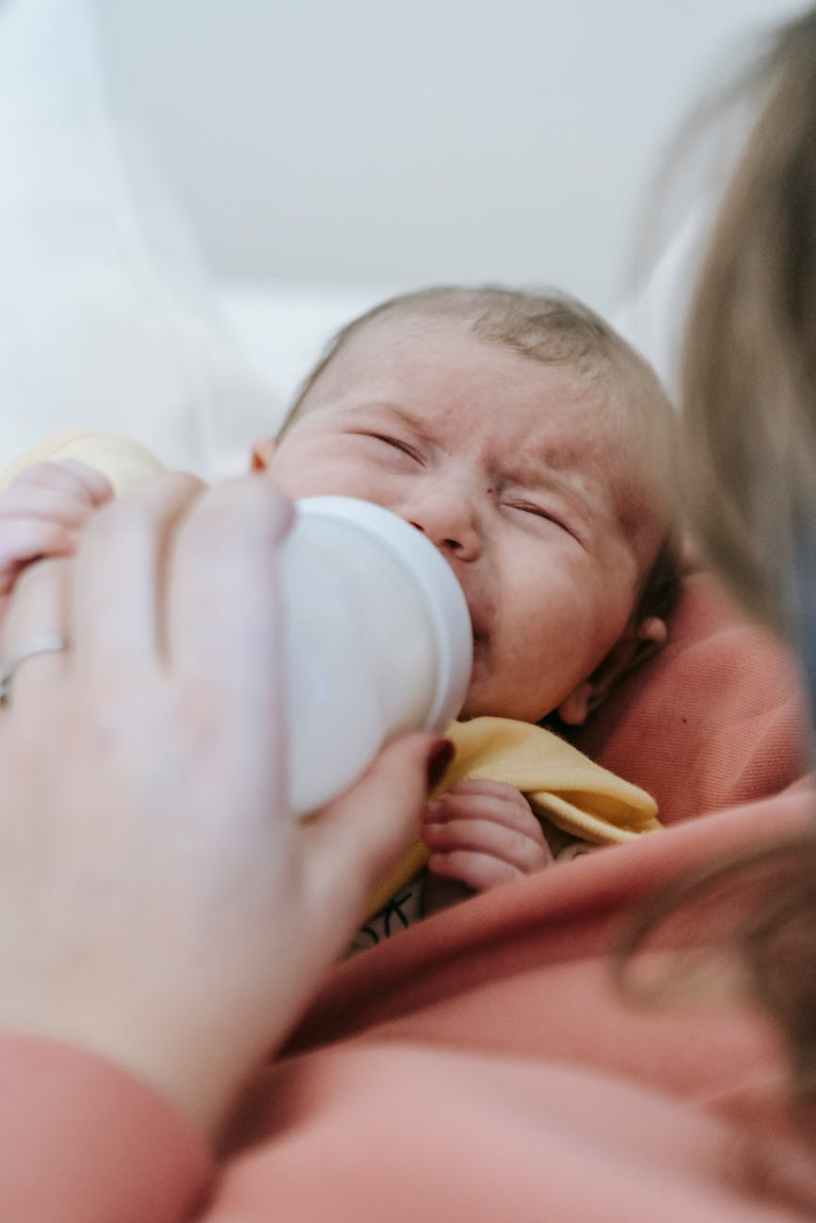
The government has no specific plans to protect infants and young children in Ireland in the event of a national emergency, say authors of a new report.
During storm Éowyn in January researchers monitored social media, said Dr Aileen Kennedy, School of Biological Health and Sports Science at the Technological University Dublin (TUD) to better understand how young children might fare in a national emergency.
“Those without power for long periods would have had to find alternative ways to sterilise equipment and heat water to make with commercial milk formula,” said Dr Kennedy, a co-editor of the report. “The lack of internet access in some areas would have also made getting information about infant feeding difficult.”
“We did also see reports of some breastfeeding mothers worrying about their frozen breastmilk defrosting in their freezer due to the lack of power for a long period and trying to seek out information about this online,” she said.
The Infant and Young Child Feeding in Emergencies on the Island of Ireland (IYCF-E) document was compiled by TUD and Queen’s University Belfast (QUB) researchers to guide the creation of an all-island preparedness plan.
Dr Clare Patton, QUB, one of the report’s editors said: “Ireland has a proud history of leading the way on public health. But when it comes to protecting how our youngest citizens are fed, we’re falling behind.”
Emergencies due to national disasters, or public health crises pose significant risks to infants and young children, say researchers because disruptions to food supply chains, lack of access to safe water, and inadequate support for breastfeeding can lead to malnutrition, illness, or even death of children.
Dr Kennedy, along with report co-editors Dr Patton and Dr Liz O’Sullivan, a nutrition lecturer at TUD said that ‘embedding’ infant and young child feeding into national emergency planning was an important goal.
“Our research, and recent experiences of parents during storm Éowyn, has highlighted that families are not prepared or supported to manage infant and young child feeding during crises, said Dr O’Sullivan.
“Too long, emergency response systems nationally and internationally have assumed that parents will simply look after small children in emergencies.”
“However, that’s a simplistic viewpoint and in reality, parents may need considerable support to do so,” Dr O’Sullivan said.
Researchers said that it was vital that emergency plans promote and support breastfeeding – the rates of which Ireland has among the lowest in the world.
It was also critical they said, that plans ensured reliable access to affordable milk formula, and that trained professionals are in place ready to provide assistance to families facing an infant or young child feeding emergency.
“The EU’s new Preparedness Union Strategy recognises that crises are becoming more complex and unpredictable, and that we must be proactive rather than reactive,” said Dr Kennedy.
“This is especially true for infants and young children, who are among the most vulnerable in any emergency due to their unique nutritional needs, limited nutrient reserves, and immature immune systems,” she said.
“Without the right support, they are at high risk of malnutrition and illness, which can have lasting consequences for their growth, development, and future potential,” Dr Kennedy added.
 Science Spinning