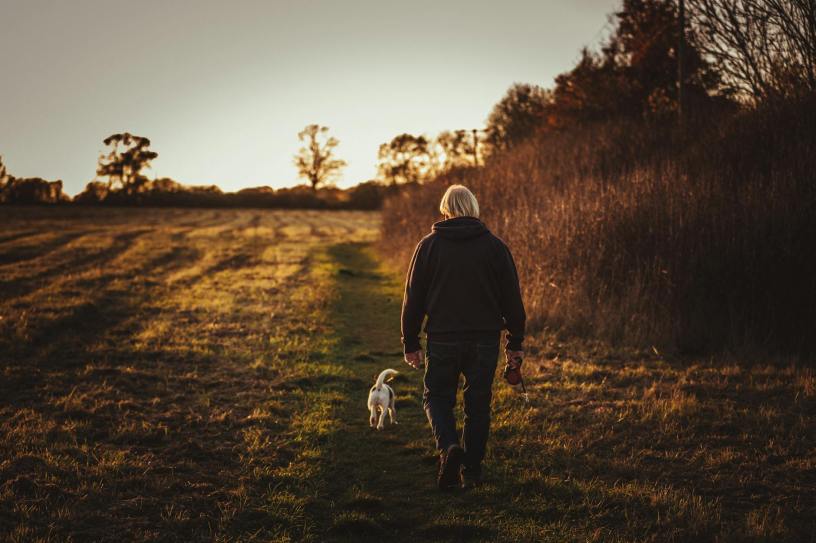
Regular dog-walking at least four times a week has been found to reduce the risk of falls in older people – the most common cause of accidental death in over-60s.
“We showed that people who walk their dog four times per week had a lower likelihood of unexplained falls,” said Dr Robert Briggs, a consultant geriatrician at St James’s Hospital and co-author of new research published in Gerontological Society of America.
Unexplained falls, said Dr Briggs, are those that cannot be explained by trips or slips or people getting pushed or knocked over and are most associated with injuries in later life.
“One in 16 older people, every year, end up in the emergency department after a fall,” he said. “So, even reducing a small proportion of that burden of falls would have a significant impact on the health of older people.”
Dr Briggs, and Dr Eleanor Gallagher based at the Mercer’s Institute of Successful Ageing, were keen to see if dog-walking could be scientifically shown to improve the health of older people, given the lack of data available to prove the benefits.
They set up a study using information from Tilda, the Irish Longitudinal Study on Ageing, at Trinity College Dublin. The study followed people aged 60 or over who are living in the community, usually at home, and not in a nursing home, over a 12-month period.
The researchers looked at data from over 2,000 older people for the study. The results showed regular dog-walkers had significantly better mobility, a lower likelihood of unexplained falls and less fear of falls.
“One of the things that we all recognise about older people is how important their pets are to them,” Dr Briggs said.
“We have patients whose main concern with going to hospital is who is going to look after their dogs, their cat.
“We know that we need to find strategies to stop people falling, or to prevent falls, and one of the ways we are suggesting is increased physical activity and dog-walking.
“Falls can have a significant impact on the health of the older person in terms of loss of independence, fear of falling, effects on mobility, confidence and nursing home and hospital admissions.”
The advice for older people is that if you are walking a dog regularly, keep walking it, as long as you are able. If you don’t have a dog, try to replicate the kind of activity that walking a dog would provide – regular, brisk exercising.
 Science Spinning