High-traffic tourism can boost biodiversity, according to Trinity College Dublin research conducted at a popular Co Kerry location on the Wild Atlantic Way.
Stunning landscapes and wildlife attract tourists to visit Ireland’s tourist spots, but it’s commonly believed that tourism is destroying these habitats.
“Our new research challenges that core assumption,” said Dr Andrew Torsney, School of Natural Sciences who led research with colleague Professor Yvonne Buckley, published today in journal Global Ecology and Conservation.
The TCD researchers chose Derrynane, a village within one of Ireland’s Special Areas of Conservation on the Iveragh Peninsula as the site for study.
Derrynane House is famously the home of Daniel O’Connell, the 19th century MP for Clare who championed Catholic Emancipation. The house and the surrounding National Park are managed by the Office of Public Works (OPW).
The site with its dune habitats rich in biodiversity was selected out of 47 possible tourist sites on the Wild Atlantic Way that were also considered.
“We know that roughly 50pc of protected sites in Europe, and more so in Ireland, have tourism as a known threat,” said Dr Torsney. “Essentially tourism can and does cause damage if it’s not managed correctly.”
At Derrynane scientists found that when the OPW brought in cows for short periods of low intensity grazing it preserved and increased the numbers of plant species.
“Our findings highlight how targeted conservation grazing supports the health of species-rich dune habitats, providing a valuable tool for land managers to balance conservation with public access,” said Dr Torsney.
Specifically, the researchers found biodiversity had modestly increased in grazed habitats, while ungrazed habitats experienced a 20pc decline in biodiversity by year four of the study.
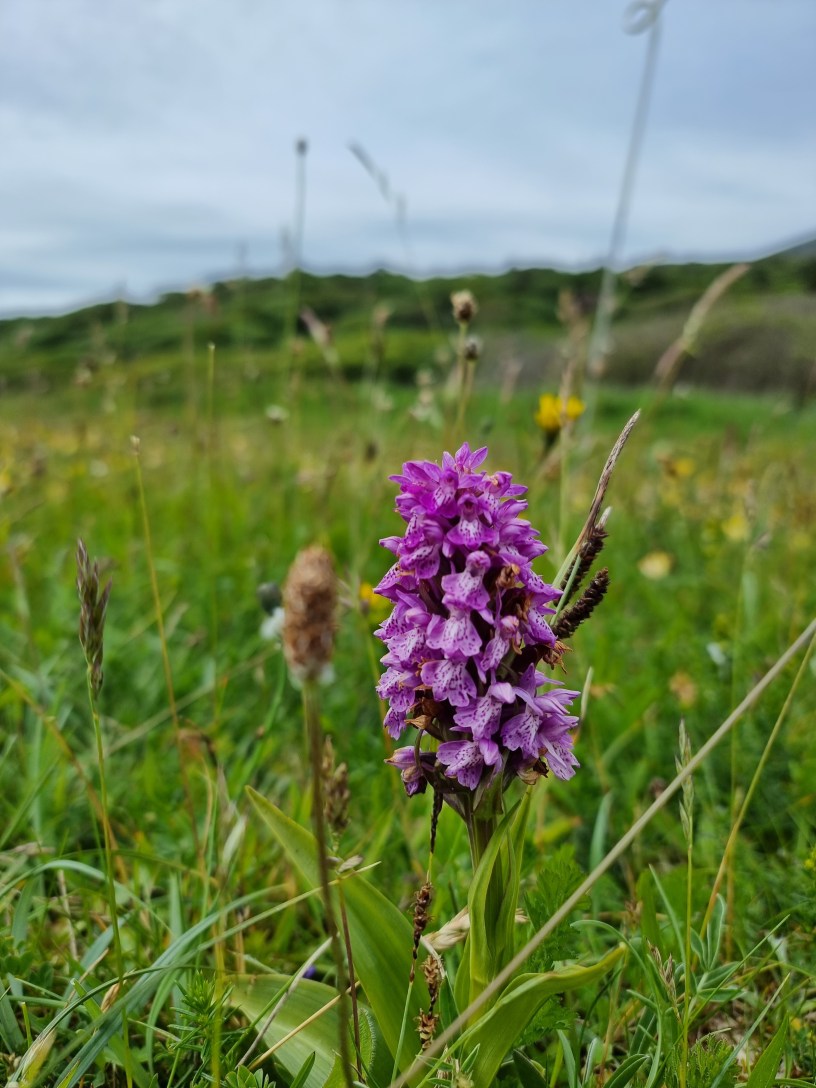
Among the plant species that benefited from grazing management at Derrynane were the Fair Flax (Linum catharticum), the Pyramidal Orchid (Anacamptis pyramidalis) and the Lady’s Bed-Straw (Galium verum).
Wild Atlantic Way
The study was conducted for Failte Ireland, to determine whether large volume tourism can happen with no identifiable impact on biodiversity if managed correctly.
“Tourist destinations such as those along the Wild Atlantic Way capitalise on showcasing impressive visuals of nature using stunning landscapes and lush meadows as attractions, but many people have held the belief that tourism is damaging to the conservation of these habitats,” said Dr Torsney.
As nature-based tourism grows, this study can help authorities to chart a way forward where tourism and conservation are aligned, the researchers say.
“The OPW’s approach to balancing visitor access with grazing management for habitat protection has led to greater plant diversity, which in turn enhances the overall experience for visitors who appreciate a richer, more vibrant landscape.”
“Most of the (scientific) literature focuses on using people as a proxy for damage,” explained Dr Torsney. “The researcher goes to damaged sites, records the damage and users visitor numbers as a predictor of this.”
“Our findings highlight how targeted conservation grazing supports the health of species-rich dune habitats, providing a valuable tool for land managers seeking to balance conservation with public access,” said Dr Torsney.
 Science Spinning